

The Expanding Landscape of the CBD Edibles Market
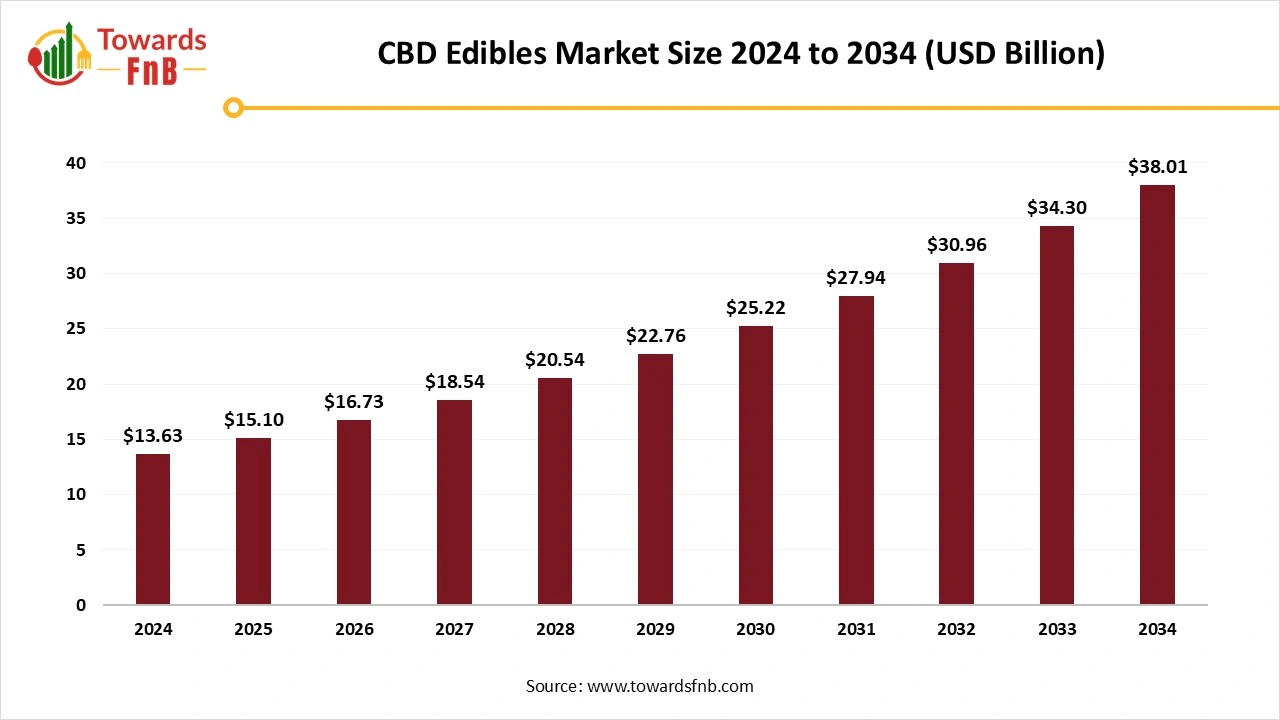
The market for CBD edibles is experiencing an exciting phase of growth, projected to reach approximately USD 38.01 billion by 2034, up from USD 15.10 billion in 2025. This represents a robust compound annual growth rate (CAGR) of 10.8% between 2025 and 2034, emphasizing the strong potential for expansion in this sector.
Market Overview
According to a study published by Towards FnB, based on figures from October 3, 2025, the global CBD edibles market was valued at USD 13.63 billion in 2024 and is expected to continue its upward trajectory. The increasing legalization of cannabis and a growing interest in functional and fortified food and beverage options have driven this surge in demand. Health-conscious consumers are increasingly turning to CBD-infused products for their perceived benefits.
Key Insights Into the Market
Regional Analysis:
North America is currently the dominant player in the CBD edibles market, commanding over 40% of the market share in 2024. However, the Asia-Pacific region is projected to experience significant growth during the forecasted period, indicating a shift towards greater consumer awareness and acceptance in these emerging markets.
Product Segmentation:
Gummies were the top-selling product type in 2024, accounting for 58% of the market share. This is attributed to their convenient form and appealing flavors, making them a popular choice among consumers. The supplements segment is also expected to show substantial growth as consumers explore CBD’s health benefits in various forms.
Source Analysis:
In terms of the source of CBD in edibles, hemp-derived products occupied 70% of the market share in 2024. Given their lower THC content, hemp products are viewed as a safer alternative, which aligns with consumers’ preferences for non-psychoactive options.
Consumer Trends Fueling Demand
The escalating interest in CBD edibles can be attributed to increasing consumer awareness regarding the health advantages associated with CBD. Many individuals are utilizing these products as natural alternatives for managing stress, anxiety, depression, and sleep disorders. Furthermore, as legalization spreads globally, manufacturers are empowered to create innovative products—gummies, beverages, snacks, and more—that cater to a diverse demographic.
Innovative Product Development:
The market is seeing a surge in creative product offerings, including CBD-infused snacks and cooking sauces. This aligns well with the growing consumer demand for functional products that support both physical and mental health.
The Role of Artificial Intelligence
Artificial Intelligence (AI) is revolutionizing the CBD edibles market by enhancing product innovation and operational efficiency. Companies leverage AI to analyze consumer data, identifying trends for wellness, stress relief, and nutritional needs. AI is instrumental in ensuring consistent product quality, which is crucial in an industry where consumer trust is imperative.
Recent Developments
Recent advancements in the CBD edibles market highlight a competitive atmosphere:
- Exhale Wellness has expanded its offerings with new gummy products, including Delta-9 Bottle Caps and D9 + CBN Sleep Gummies, reflecting a more diverse product line for consumers.
- Wana Brands launched a range of hemp-derived delta-9 THC gummies and beverages in Georgia, marking its commitment to innovation and plant-powered wellness.
Regulatory Landscape
The regulatory environment remains a complex issue across different regions.
- United States: Hemp-derived CBD products are federally legal, thanks to the 2018 Farm Bill, but the FDA has strict guidelines on marketing CBD in food products.
- Canada: The Cannabis Act fully legalizes CBD, allowing for regulated sales across the country.
- Europe: Regulations differ by country, with the European Union classifying CBD as a Novel Food, which requires approval before being marketed.
These variances can pose challenges for manufacturers wanting to navigate the market’s complexities effectively.
| Region | Legal Status Summary | Explanation |
|---|---|---|
| USA | Federally legal | Hemp-derived CBD must contain less than 0.3% THC. |
| Canada | Completely legal and regulated | Governed by the Cannabis Act. |
| Europe | Legal under Novel Food | Requires authorization; different THC limits by member state. |
Challenges and Opportunities
While the sector is thriving, it faces challenges such as stringent regulatory hurdles that could slow growth. Variations in law across different jurisdictions create an intricate landscape for manufacturers, making compliance a pressing concern. However, opportunities lie in product innovation—a focus on developing unique flavors and formulations can help attract a broader consumer base.
Value Chain in the CBD Edibles Market
The CBD edibles market comprises several critical stages, from sourcing high-quality hemp to processing and quality control. Following strict regulations ensures consumer safety and product integrity is maintained throughout the supply chain.
- Sourcing: High-quality CBD hemp extracts must be sourced from reputable suppliers demonstrating responsible cultivation practices.
- Processing: CBD extraction methods should convert the compound into usable forms while ensuring a water-soluble state for edibles.
- Quality Control: Rigorous testing for potency, purity, and compliance with food safety standards is essential.
Conclusion
The CBD edibles market is poised for significant growth driven by an increasing consumer appetite for health-oriented alternatives and innovative product offerings. With the competitive landscape continually evolving, stakeholders must stay vigilant and adaptable to navigate both opportunities and challenges within this dynamic market.