

Cannabis Beverages Market Forecast and Outlook 2025 to 2035
The global cannabis beverages market is projected to grow from USD 1.6 billion in 2025 to approximately USD 7.6 billion by 2035, recording an absolute increase of USD 6.0 billion over the forecast period. This represents a total growth of nearly 375%, with the market forecast to expand at a CAGR of 16.4% between 2025 and 2035.
Quick Stats for Cannabis Beverages Market
- Cannabis Beverages Market Value (2025): USD 1.6 billion
- Cannabis Beverages Market Forecast Value (2035): USD 7.6 billion
- Cannabis Beverages Market Forecast CAGR: 16.9%
- Leading Type in Cannabis Beverages Market: Non-Alcoholic Beverages
- Key Growth Regions in Cannabis Beverages Market: North America, Europe, and Asia Pacific
- Top Players in Cannabis Beverages Market: CANN Social Tonics, ARTET LLC, VCC Brands, Keef Brands, BellRock Brands
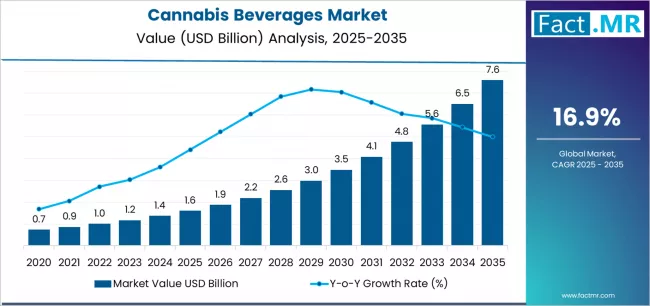
The market is anticipated to increase nearly 4.8 times during this period, driven by the growing legalization of cannabis for recreational and medicinal use, increasing consumer preference for alternative wellness beverages, and innovations in formulation and distribution. The convergence of health-conscious consumption, plant-based product development, and lifestyle-driven beverage innovation positions cannabis beverages as one of the fastest-evolving categories in the functional beverage sector.
Market Growth Projections
Between 2025 and 2030, the cannabis beverages market is estimated to expand from USD 1.6 billion to USD 3.9 billion, adding USD 2.3 billion in value and representing around 30% of the decade’s total forecast growth. This phase will be defined by widespread acceptance of non-alcoholic cannabis beverages, especially CBD-infused drinks targeted for relaxation, recovery, and mood enhancement.
The shift towards alcohol alternatives in social and wellness environments is expected to strengthen demand for low-THC and THC-free beverages across North America, Western Europe, and selected Asia-Pacific markets. Beverage producers are investing in advanced emulsion technology and nanoencapsulation systems to boost bioavailability and ensure consistency in cannabinoid delivery, enhancing consumer experience with predictable onset and sustained effects.
Technological Innovations Driving Market Growth
From 2030 to 2035, the market is forecasted to grow from USD 3.9 billion to USD 7.6 billion, contributing USD 3.7 billion and accounting for roughly 70% of total decade-long expansion. This phase will mark the commercial scaling of THC-based beverages, particularly in regions with established laws for recreational cannabis. Product categories such as sparkling waters, teas, elixirs, and ready-to-drink tonics are expected to diversify, catering to various consumption occasions from social gatherings to relaxation and wellness rituals.
The integration of cannabis-infused beverages into mainstream retail settings will further accelerate adoption. Partnerships between beverage multinationals and cannabis producers are anticipated to broaden product reach while strengthening consumer trust through enhanced safety, transparent labeling, and standardized dosing.
Foundational Developments (2020-2025)
Between 2020 and 2025, the cannabis beverage market’s groundwork was laid through gradual legalization in North America, the rise of CBD wellness products, and a surge in functional beverage consumption post-pandemic. Early product launches prioritized formulation experimentation and consumer education, setting the stage for mass-market acceptance.
Research and development during this period primarily focused on improving stability, shelf life, and flavor masking to address the unique formulation challenges associated with cannabinoids. The success of CBD-infused drinks in early-adopter markets like the USA and Canada validated the category’s potential, encouraging similar regulatory explorations in Europe and Latin America.
Revenue Breakdown Today vs. Next
| Period | Primary Revenue Buckets | Share | Notes |
|---|---|---|---|
| Today | Non-alcoholic cannabis drinks | 66% | Wellness focus, CBD adoption |
| Alcoholic cannabis beverages | 34% | Hybrid THC-alcohol formats | |
| THC-based formulations | 64% | Recreational, relaxation focus | |
| CBD-infused beverages | 36% | Wellness, anti-inflammatory | |
| North American markets | 72% | Legal infrastructure leadership | |
| International expansion | 28% | Europe, Asia Pacific growth | |
| Future (3-5 yrs) | Non-alcoholic wellness drinks | 68-72% | Sober-curious trend acceleration |
| Alcoholic hybrid formats | 28-32% | Premium positioning | |
| THC recreational beverages | 62-66% | Social consumption occasions | |
| CBD functional tonics | 34-38% | Medicinal wellness expansion | |
| Mainstream retail channels | 58-62% | Grocery, convenience integration | |
| Direct-to-consumer platforms | 38-42% | Premium brand positioning | |
| Tea-based cannabis drinks | 24-28% | Asian market expansion |
Cannabis Beverages Market Key Takeaways
At-a-Glance Metrics
| Metric | Value |
|---|---|
| Market Value (2025) → | USD 1.6 billion |
| Market Forecast (2035) ↑ | USD 7.6 billion |
| Growth Rate ★ | 16.9% CAGR |
| Leading Type → | Non-Alcoholic Beverages |
| Primary Component → | THC-based Formulations |
The market demonstrates exceptional fundamentals, with non-alcoholic cannabis beverages capturing a dominant 66% share due to their proven wellness capabilities and functional beverage optimization. THC-based formulations drive primary component demand at 64% share, supported by increasing recreational legalization requirements and relaxation-focused consumption development.
Geographic expansion remains concentrated in North America, which holds a commanding 72% market dominance, while emerging markets exhibit accelerating adoption rates driven by medicinal legalization initiatives and rising wellness consumption standards.
Imperatives for Stakeholders in Cannabis Beverages Market
Design for bioavailability, not just THC content
- Provide complete beverage experiences: formulation development, flavor optimization, dosage consistency, shelf-stable packaging, and consumer education.
- Structure consumption occasions: social relaxation protocols, wellness supplementation routines, recreational usage patterns, and optimized onset times for consumer satisfaction.
Regulatory readiness for evolving legalization
- Implement real-time compliance monitoring systems, product testing documentation, and supply chain traceability (lab certification, state licensing requirements, quality assurance protocols).
Wellness-by-design approach
- Focus on low-calorie formulations, functional ingredient stacking, precise dosing technology, and transparent cannabinoid profiling documentation.
Distribution-focused market entry
- Clearly navigate regulatory pathways and establish retail partnerships (dispensaries, licensed retailers, mainstream grocery expansion); utilize direct-to-consumer channels for brand building and consumer relationship development.
Segmental Analysis
The market segments by type into non-alcoholic and alcoholic variants, reflecting the evolution from traditional cannabis consumption methods to sophisticated beverage solutions tailored for wellness-oriented and recreational applications.
The component segmentation divides the market into THC-based (64%) and CBD-infused (36%) categories, emphasizing distinct consumer preferences for recreational relaxation versus medicinal wellness applications.
According to regional segmentation, North America dominates with a leading 72% market share, followed by Europe at 14% and Asia Pacific at 9%, indicating varied regulatory environments and consumer acceptance levels.
This segmentation structure highlights the evolution of beverages from basic cannabis infusion towards sophisticated functional drink systems with enhanced bioavailability and precise dosing capabilities, while application diversity spans from recreational social consumption to medicinal wellness applications demanding consistent therapeutic delivery.
Why do Non-Alcoholic Beverages Command the Largest Share in the Cannabis Beverages Market?
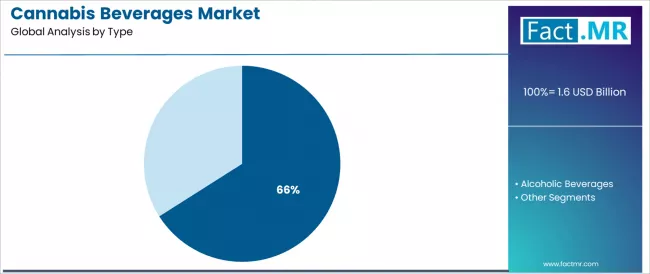
Non-alcoholic cannabis beverages hold the leading position in the cannabis beverages market with a commanding 66% market share due to proven wellness characteristics, including enhanced bioavailability traits, zero-alcohol health positioning, and optimization for functional consumption that allows users to achieve desired relaxation effects across diverse occasions and lifestyle applications.
This segment benefits from consumer demands for alcohol alternatives that provide consistency in cannabinoid delivery, reduced caloric content, and wellness-oriented formulation attributes without requiring significant changes to alcohol consumption infrastructure.
Advanced beverage formulations support nano-emulsification, enabling rapid onset and compatibility within existing functional beverage categories, where health positioning and consumption flexibility are critical consumer requirements. Tea-based cannabis beverages capture a 37% share within the non-alcoholic segment, appealing to wellness-conscious consumers seeking familiar formats.
Key market characteristics:
- Innovative nano-emulsion technologies that enhance cannabinoid dispersion and bioavailability.
- Superior onset consistency, characterized by effects initiating in 15-20 minutes with reliable duration control.
- Compatibility with wellness beverages, encompassing zero-sugar formulations, adaptogen integration, and functional ingredient stacking for comprehensive health applications.
What makes Alcoholic Cannabis Beverages an Emerging Growth Segment?
Alcoholic cannabis beverages maintain a significant market presence with a 34% share, attributed to their hybrid recreational properties and premium positioning attributes. These beverages appeal to consumers seeking enhanced social experiences with dual psychoactive effects, offering sophisticated consumption scenarios for premium entertainment occasions. Market growth is driven by craft beverage innovation, emphasizing unique flavor profiles and experiences through optimized THC-alcohol synergies.
How does THC Dominance Shape Component Preferences in Cannabis Beverages?

THC-based formulations lead the cannabis beverages market with a 64% share, driven by widespread adoption of recreational cannabis legalization and a growing focus on relaxation-oriented consumption, stress relief, and euphoric experiences that maximize consumer satisfaction while adhering to consistent psychoactive standards.
Consumers prioritize intensity, predictable onset, and the integration of social consumption occasions that enable synchronized experiences across multiple servings. The segment benefits from recreational legalization infrastructure and consumer education efforts that emphasize THC-based beverages for relaxation and social enhancement. THC relaxation drinks capture 45% of the THC segment, showcasing consumer preferences for targeted effects.
Why Are CBD-Infused Beverages Experiencing Rapid Wellness Adoption?
CBD-infused beverages account for 36% of component share, catering to wellness requirements such as anti-inflammatory applications, anxiety management, and recovery-focused occasions.
CBD beverages demand precise cannabinoid delivery that maintains therapeutic consistency while providing effective wellness benefits and minimal psychoactive impacts, appealing to medicinal consumers and functional beverage enthusiasts seeking evidence-based health applications.
What drives North America’s Market Leadership in Cannabis Beverages?
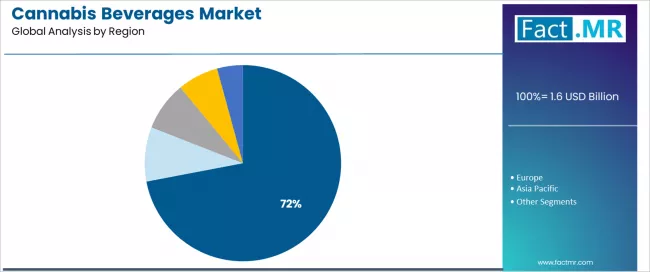
North America firmly establishes its market leadership in the cannabis beverages sector, with a dominant 72% share driven by comprehensive legalization frameworks and an increasing focus on normalizing recreational cannabis consumption, expanding medicinal cannabis options, and fostering beverage innovation that enhances consumer accessibility while upholding regulatory standards.
Consumers and retailers favor legal clarity, product variety, and blending with established beverage distribution systems that advance market development across multiple state jurisdictions. This region enjoys a significant influx of cannabis investment capital and beverage industry know-how, focusing on developing sophisticated platforms for recreational and wellness purposes.
Regional dynamics include:
- Robust growth in U.S. markets with legalization across more than 25 states demanding advanced formulation capabilities for cannabis beverages.
- Increasing adoption in Canadian markets for both recreational and medicinal cannabis beverage applications.
- Integration with craft beverage industries for premium product positioning and artisanal differentiation.
How are European Markets Developing Cannabis Beverage Infrastructure?
Europe captures a 14% market share owing to its evolving medicinal cannabis frameworks, the acceptance of CBD beverages, and wellness-centric consumption trends. There is a variety of regulatory approaches across member states, with CBD-infused functional beverages gaining traction in wellness channels, while THC-based recreational formats continue to grapple with ongoing regulatory restrictions, requiring careful navigation strategies.
Why is Asia Pacific Emerging as a High-Growth Cannabis Beverage Region?
The Asia Pacific region holds a 9% market share with exceptional growth prospects fueled by emerging medicinal programs, hemp beverage legalization, and integration of traditional wellness practices. Countries such as India, China, and Japan show increasing acceptance of CBD-infused beverages within their established wellness consumption frameworks, while regulatory experimentation in select jurisdictions opens avenues for early movers in cannabis beverages.
Drivers, Restraints, and Key Trends of the Cannabis Beverages Market
| Category | Factor | Impact | Why It Matters |
|---|---|---|---|
| Driver | Expansion of recreational legalization & the sober-curious movement | ★★★★★ | Large-scale regulatory reforms lead to better distribution and retail accessibility; consumer preferences shift towards non-alcoholic wellness beverages which boosts cannabis beverages. |
| Driver | Acceptance of medicinal cannabis & wellness positioning | ★★★★★ | Drives demand for therapeutic cannabinoid beverages; companies providing medically informed products gain an edge in health-focused markets. |
| Driver | Innovations in beverage industry & bioavailability technology | ★★★★☆ | Consumers demand predictable effects and quick onset; technological advancements allow for diverse consumption occasions beyond traditional cannabis usage. |
| Restraint | Regulatory fragmentation & compliance complexity | ★★★★★ | Manufacturers face uncertainty and barriers to market access; increasing operational costs hinder scalability across differing regulations. |
| Restraint | Product testing demands & quality assurance costs | ★★★☆☆ | Quality-focused brands incur significant lab expenses and certification complexities, slowing product iteration and price competitiveness. |
| Trend | Mainstream retail integration & grocery channel expansion | ★★★★★ | Consumer expectations rise for accessible cannabis beverages beyond dispensaries; normalization in retail becomes key for mass adoption. |
| Trend | Convergence of functional beverages & ingredient stacking | ★★★★☆ | Cannabis beverages merge with broader wellness trends; multi-functional positioning promotes premium pricing and differentiation amidst saturated functional drink categories. |
Analysis of the Cannabis Beverages Market by Key Country
The cannabis beverages market reveals notable regional growth dynamics, with robust performers like India (21.0% CAGR) and China (20.6% CAGR) driving development via pilot medicinal programs and hemp beverage legalization. Other strong players include Brazil (19.9% CAGR), the USA (16.9% CAGR), and Germany (18.8% CAGR), benefiting from established legalization frameworks and advanced beverage innovation capabilities. Markets in the UK (18.5% CAGR) and Japan (17.9% CAGR) also show consistent growth, supported by the advancement of wellness beverages and functional food integration.
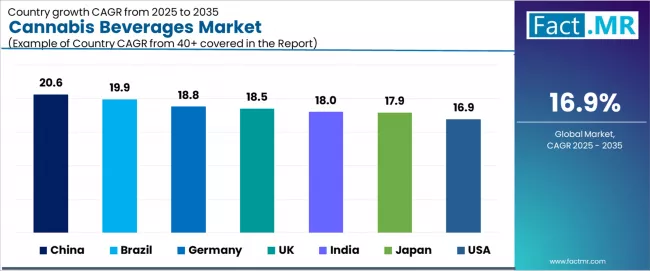
| Region/Country | 2025-2035 Growth | How to Win | What to Watch Out For |
|---|---|---|---|
| India | 18.0% | Focus on Ayurveda-based wellness positioning | Regulatory uncertainty; medicinal-only frameworks |
| China | 20.6% | Lead with hemp-derived functional drinks | Import restrictions; CBD regulatory limits |
| Brazil | 19.9% | Offer recreational legalization readiness | Economic volatility; distribution infrastructure |
| USA | 16.9% | Provide state-compliant retail solutions | Federal prohibition; banking restrictions |
| Germany | 18.8% | Push medicinal cannabis beverage applications | Prescription requirements; pharmacy distribution |
| UK | 18.5% | Wellness CBD beverage positioning | THC restrictions; novel food regulations |
| Japan | 17.9% | Hemp functional beverage integration | Conservative regulations; limited cannabinoid acceptance |
Why is India a Promising Market for Cannabis Beverages?
India’s cannabis beverage market remains largely potential-driven, steered by emerging research initiatives and Ayurvedic medicine frameworks rather than widespread commercialization. While recreational cannabis sale remains prohibited under the Narcotic Drugs and Psychotropic Substances (NDPS) Act, the country has initiated limited medicinal cannabis and industrial hemp programs in certain states. These early-stage projects focus on hemp cultivation and cannabinoid research under licensed conditions, laying the groundwork for future therapeutic applications.
The exploration of hemp seed–based and Ayurveda-aligned wellness beverages reflects a growing consumer preference for natural adaptogens and functional herbs within established consumption models such as herbal teas and tonics. Urban markets like Mumbai, Delhi, and Bangalore showcase increasing awareness regarding hemp’s nutritional and wellness benefits, fostering product innovation in the THC-free segment.
Domestic manufacturers emphasize herbal extraction technologies and the integration of Ayurvedic ingredients to create compliant, plant-based beverages that resonate with India’s traditional wellness sector. Networks are expanding through online wellness platforms and nutraceutical retailers, while ongoing research into medicinal cannabis encourages long-term opportunities for cannabinoid formulations once appropriate legal frameworks evolve.
Key Takeaways:
- India’s cannabis beverage market remains in an early, research-driven phase, with commercial prospects dependent on future regulatory clarity.
- Innovations in hemp seed and Ayurvedic beverage formulations provide a foundation for eventual incorporation of cannabinoid wellness products under licensed medical applications.
How will the Cannabis Beverages Market in China Expand?
In the Guangdong, Shanghai, and Beijing regions, wellness-focused consumers are embracing hemp-derived drinks as sophisticated complements for stress management and overall recovery, driven by an increased acceptance of CBD products and a relaxation of import restrictions that highlight the importance of natural wellness ingredients. This market holds a 20.6% growth rate, strengths backed by government-driven hemp industry development initiatives and functional food innovations that promote hemp-based nutritional offerings for wellness applications. CBD-infused beverages, especially those that provide gentle relaxation effects, resonate strongly in urban settings where stress management and sleep enhancement are critical health priorities.
Market expansion benefits from robust functional beverage manufacturing infrastructure and ingredient innovation capacities that allow for advanced domestic production of hemp extraction technologies. Consumer adoption aligns with traditional practices in Chinese medicine, integrating natural components and holistic health strategies to guide purchasing decisions and product acceptance.
How are Legalization Initiatives in Brazil Enhancing Scope for Cannabis Beverage Consumption?
Brazil is establishing rapid legalization momentum through progressive medicinal cannabis regimes and emerging discussions on recreational legalization, which are integrating cannabis beverages into wellness retail channels and specialty dispensary operations. A growth rate of 19.9% reflects rising political acceptance of cannabis normalization and increasing adoption of cannabinoid therapies that support the market’s expansion.
This growth is centered in major urban areas like São Paulo, Rio de Janeiro, and Brasília, where consumers demonstrate an openness to infused functional beverages that address health-conscious millennials seeking alternative wellness solutions with natural ingredient profiles. Brazilian beverage startups focus on integrating tropical flavors while maintaining affordability, creating demand for locally produced cannabis beverages that blend cannabinoid efficacy with cultural taste preferences. The market’s development is bolstered by increasing medicinal patient populations and expanding wellness beverage setups that ensure compliance with Brazilian healthcare regulations.
What is the Outlook for the Cannabis Beverages Market in the USA?
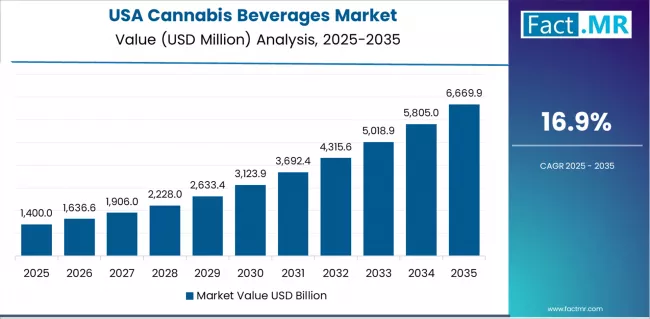
The USA leads the recreational cannabis market through comprehensive state-level legalization programs, integrating cannabis beverages into licensed dispensaries, delivery services, and emerging mainstream retail channels. The country experiences a growth rate of 16.9%, resulting from established consumer acceptance of cannabis and sophisticated beverage innovation capabilities that support the broad deployment of THC and CBD beverages for both recreational and wellness purposes. Markets are particularly concentrated in legalized states like California, Colorado, and Michigan, where advanced nano-emulsification formulations appeal to consumers seeking rapid onset and precise dosing for responsible consumption.
American manufacturers capitalize on established craft beverage expertise and comprehensive distribution systems, including direct-to-consumer platforms and dispensary partnerships, fostering brand loyalty and repeat purchase behaviors. The US market is also supported by robust investment in cannabis and beverage industry talent, facilitating product innovation while advocating for regulatory measures and promoting consumer education for responsible usage of cannabis beverages.
How will Medical Cannabis Production Pave the Way for Cannabis Beverage Consumption in Germany?
Germany’s advanced pharmaceutical landscape integrates cannabis beverages through documented medicinal effectiveness, particularly in pain management and anxiety treatment, available via prescription-based distribution through pharmacies. The nation achieves an 18.8% growth rate by leveraging pharmaceutical expertise in cannabinoid standardization and medical-grade formulation development—a vital element to ensuring patient outcomes and strict regulatory compliance.
In medicinal centers like Berlin, Hamburg, and Munich, prescription consumption of cannabis beverages aligns with comprehensive treatment plans and therapeutic monitoring systems, enhancing regulatory adherence. Pharmaceutical firms prioritize stability and EU compliance in cannabis beverage production, resulting in demand for medically validated formulations that meet precise dosing requirements and uphold high manufacturing standards. The established patient base and physician education initiatives solidify Germany’s role in cannabis beverage innovation and regulatory advancement.
Europe Market Split by Country
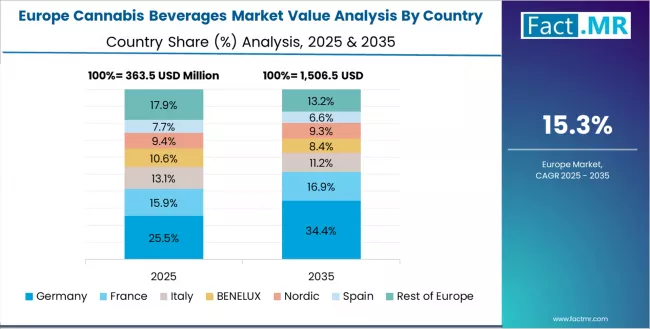
Projections indicate Europe’s cannabis beverages market will grow from USD 0.2 billion in 2025 to USD 1.1 billion by 2035, constituting 14% of the global market. Germany is anticipated to maintain its leadership, reaching USD 0.06 billion in 2025 and holding 28.5% of the European market, buoyed by its intricate medicinal cannabis infrastructure and pharmaceutical distribution channels.
The UK is projected to capture USD 0.04 billion or 19.8% of the European market in 2025, bolstered by strong CBD beverage acceptance and wellness retail expansion activities. France is expected to represent a share of USD 0.03 billion with 15.2%, reflecting slower adoption of CBD functional beverages and an evolving regulatory landscape.
Italy and Spain will command around USD 0.02 billion each, corresponding to shares of 11.4% and 9.6%, respectively, while the remaining European countries hold USD 0.03 billion, making up 15.5% of the market. This share is driven by increasing pilot programs and evolving regulations on cannabis beverages in Nordic and Eastern European markets.
How is the Market for Cannabis Beverages Expected to Expand in the UK?
The UK’s wellness beverage market showcases intricate CBD integration with proven effectiveness in functional tonic applications and wellness tea products through mainstream retail channels and health food shops. The UK maintains an 18.5% growth rate, leveraging established functional beverage expertise and evolving CBD consumption patterns. Major urban centers like London, Manchester, and Edinburgh highlight premium CBD beverages where cannabis drinks merge with lifestyle brands and functional supplements to optimize health benefits while adhering to evolving health regulations.
Participating beverage companies emphasize transparency in CBD sourcing and third-party testing within product development, creating demand for premium formulations featuring clean label attributes such as organic certifications and sustainable sourcing practices. The market thrives on the existing wellness retail infrastructure and consumers who are eager to invest in evidence-based functional beverages, especially those aimed at stress management and wellness enhancement that meet strict UK food safety standards.
How is Functional Food Integration Driving Cannabis Beverage Sales in Japan?
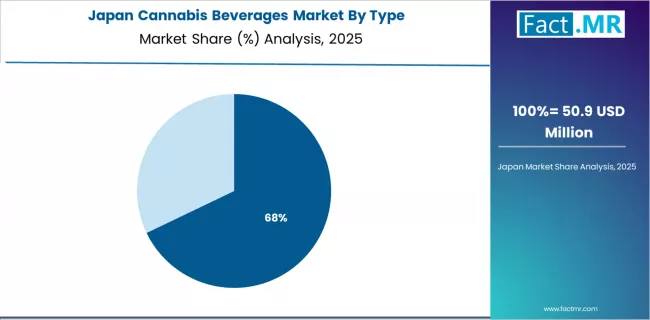
Japan’s advanced functional food market illustrates the emerging integration of hemp beverages that align with wellness positioning in relaxation tea and recovery drink categories within health food retail channels and lifestyle-specific stores. The country is maintaining a growth rate of 17.9%, capitalizing on traditional practices and conditional acceptance of functional ingredients to promote hemp-derived products. Cities like Tokyo, Osaka, and Nagoya exhibit sophisticated beverage formulations, fostering a convergence of established wellness routines and regulatory compliance with food ingredient governance.
Japanese manufacturers prioritize the standardization of hemp extracts and quality assurance in beverage innovation, fostering demand for scientifically validated formulations meeting THC-free benchmarks and production standards. The market benefits from an established functional beverage sector that inherently values natural wellness attributes while adhering to conservative regulatory landscapes.
Competitive Landscape of the Cannabis Beverages Market
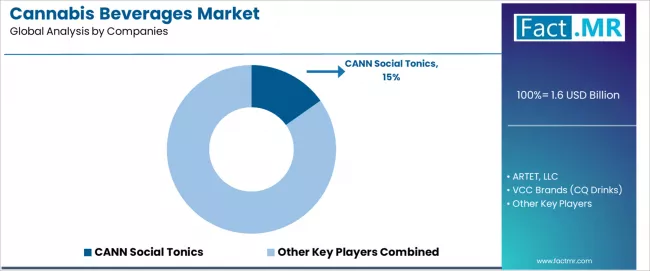
The cannabis beverages market showcases a moderately fragmented competitive environment, featuring approximately 40-60 active players across regional dispensary networks and blooming mainstream retail channels. CANN Social Tonics leads the market at a 15.2% share, capitalizing on strong positioning in premium THC segments alongside sophisticated direct-to-consumer strategies.
This fragmented landscape highlights the early-stage nature of cannabis beverage commercialization, where regulatory barriers, distribution constraints, and brand differentiation opportunities create niches for both established cannabis corporations and innovative beverage startups targeting specific consumer segments and regional focuses.
Market leadership is sustained through key competitive advantages extending beyond formulation capabilities and cannabinoid sourcing. Licensed distribution networks empower leading players to adeptly manage complex state-by-state regulatory frameworks while accessing varied channels including dispensaries and grocery partnerships.
Brand authenticity and consumer trust serve as critical differentiators in cannabis markets, wherein transparent sourcing and consistent quality drive loyalty among wellness-focused and recreational consumers. Formulation prowess in nano-emulsification, effect timing, and taste optimization distinguishes premium brands from generalized commodity offerings. Comprehensive education programs addressing dosage guidelines, expectation management, and responsible usage solidify market positioning and foster category growth.
Further, significant margin opportunities remain within premium segments where unique THC formulations featuring rapid onset and precise duration control can command higher pricing due to superior consumer experiences and technological advancements. The integration of functional cannabinoids with nootropics, adaptogens, and vitamins develops multi-benefit product profiles justifying elevated price points, distinguishing these products from basic cannabis-infused options. Experience-led brands emphasizing lifestyle, sustainable sourcing narratives, and community involvement generate goodwill and customer loyalty beyond mere transactional sales.
| Stakeholder | What They Control | Typical Strengths | Typical Blind Spots |
|---|---|---|---|
| Cannabis beverage pioneers | Product formulation, brand strategies, direct-to-consumer channels | First-mover advantages; leadership in consumer education; premium market positioning | Challenges in mainstream retail access; scaling production; navigating regulatory costs |
| Craft beverage entrants | Flavor creation; beverage production; distribution relationships | Established retail ties; scalability in production; brand credibility | Knowledge of cannabis regulations; cannabinoid formulation techniques; compliance with testing |
| Cannabis MSOs | Licensed distribution; retail dispensaries; cultivation systems | Expertise in regulatory compliance; strong customer bases; vertical integration advantages | Innovation in beverage production; mainstream brand engagement; appeal outside cannabis consumers |
| Functional beverage brands | Wellness marketing; mainstream retail access; ingredient innovation | Consumer trust in health-oriented categories; robust distribution systems; marketing savvy | Cannabis regulations; THC formulation approaches; connections with dispensaries |
| Technology innovators | Nano-emulsification; enhancements in bioavailability; onset optimization technologies | Formulation differentiation; opportunities for patenting; licenses in the market | Brand building; strategies for consumer marketing; scalability in distribution |
Key Players in the Cannabis Beverages Market
- CANN Social Tonics
- ARTET, LLC
- VCC Brands (CQ Drinks)
- Keef Brands
- BellRock Brands (Dixie Brands)
- Aphria Inc. (Tilray)
- Canopy Growth (Tweed)
- FABLE
- Mary Jones
- Teapot (Boston Beer Company, Inc.)
Scope of the Report
| Items | Values |
|---|---|
| Quantitative Value (USD Million) (2025) | USD 1.6 billion |
| Product Type | Non-Alcoholic Beverages, Alcoholic Beverages |
| Component | Tetrahydrocannabinol (THC), Cannabidiol (CBD) |
| Regions Covered | North America, Europe, Asia Pacific, Latin America, Middle East & Africa |
| Countries Covered | India, China, Brazil, USA, Germany, UK, Japan, and 15+ additional countries |
| Key Companies Profiled | CANN Social Tonics, ARTET LLC, VCC Brands, Keef Brands, BellRock Brands, Aphria Inc., Canopy Growth |
| Additional Attributes | Dollar sales by product type and component categories, regional adoption trends across North America, Europe, and Asia Pacific, competitive landscape with beverage manufacturers and cannabis companies, consumer preferences for wellness positioning and recreational consumption, integration with mainstream retail channels and dispensary networks, innovations in nano-emulsification technology and bioavailability enhancement, and development of sophisticated cannabis beverage formulations with optimized onset profiles and integrated functional ingredients. |
Cannabis Beverages Market by Segments
-
Type:
- Non-Alcoholic Beverages
- Alcoholic Beverages
-
Component:
- Tetrahydrocannabinol (THC)
- Cannabidiol (CBD)
-
Region:
- North America
- Europe
- Germany
- France
- UK
- Italy
- Spain
- Rest of Europe
- Asia Pacific
- India
- China
- Japan
- South Korea
- ASEAN
- Australia & New Zealand
- Rest of Asia Pacific
- Latin America
- Brazil
- Rest of Latin America
- Middle East & Africa
- GCC Countries
- South Africa
- Rest of Middle East & Africa